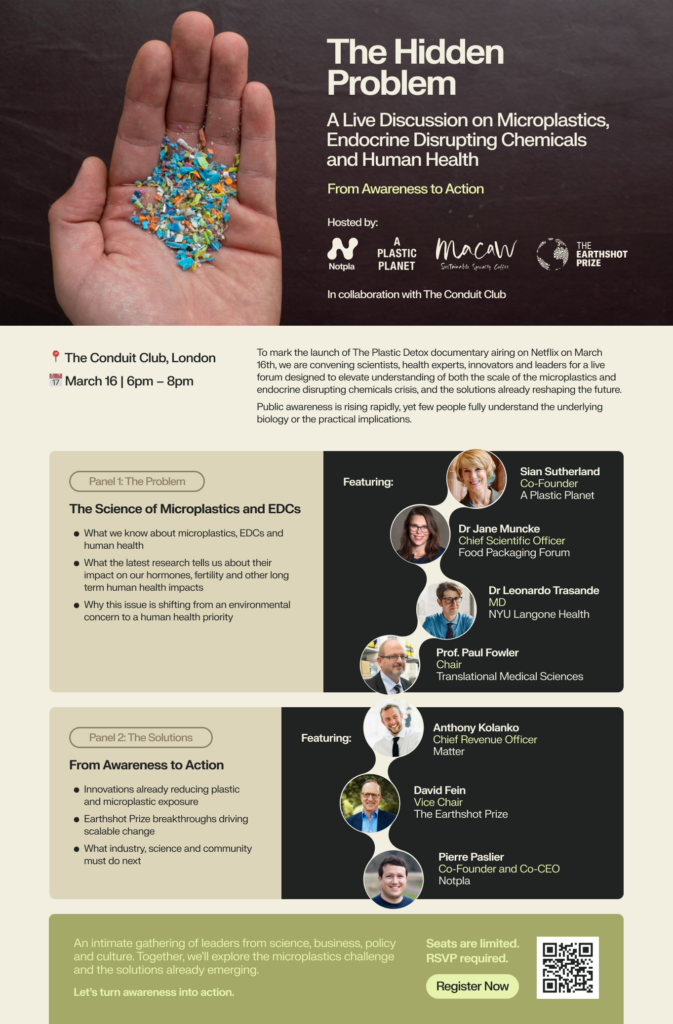
Prof. Paul Fowler Addresses Microplastics and EDC at “The Hidden Problem” Event
On 16 March, Prof. Paul Fowler, PI from partner institution University of Aberdeen, joined a panel at London’s Conduit Club for the The Hidden Event. Hosted by A Plastic Planet and The Earthshot Prize, the event marked the launch of the Netflix documentary The Plastic Detox, focusing on the intersection of plastic-related chemicals and human development.
As part of the panel on the science of microplastics and EDCs, Prof. Fowler discussed emerging evidence showing that these exposures can affect human health from early development and potentially across generations. Microplastics are now found throughout the environment and in the human body, while endocrine-disrupting chemicals can interfere with hormonal systems even at very low levels, with implications for fertility, metabolism, and long-term development. The discussion highlighted several key insights:
- Microplastics are making us less fertile: Growing evidence links plastic-related chemicals to declining fertility and falling sperm counts.
- There is no safe place left on Earth: Microplastics are now found everywhere—from the Arctic to the Antarctic—and their spread continues to increase with rising plastic production.
- The most vulnerable are at greatest risk: Exposure to endocrine-disrupting chemicals can affect development from the earliest stages of life, even at very low levels.
- Solutions already exist: Innovations in materials, filtration, and product design are helping to reduce exposure and offer more sustainable alternatives.
- Plastics are a gateway to the polycrisis: Plastic pollution is part of a broader systemic issue tied to overconsumption, environmental damage, and long-term health impacts.
For the full insights, click on the link to read the full article: https://www.theconduit.com/insights/five-things-you-should-know-about-microplastics/
The newly released documentary, The Plastic Detox is now available to watch on Netflix. The film illustrates these findings by following couples navigating infertility as they attempt to reduce their chemical exposure.
These discussions highlight the importance of ongoing research into how environmental exposures, including microplastics and endocrine-disrupting chemicals, relate to human health across the life course, an area of focus within the INITIALISE project.